The short answer: Yes. I recommend that every buyer in Utah test for radon during due diligence, whether the home is brand new or 80 years old. In my experience, about one in three homes comes back high, which lines up with what the Utah Department of Environmental Quality reports statewide. The good news is that a high result is usually a fixable problem, not a deal breaker. A mitigation system typically costs in the low thousands, and in my experience the seller usually pays for it.
By Eliot Ward, Utah real estate broker, Harvest Park Group · Updated
This guide is for anyone buying a home in Utah, especially first-time buyers who have heard the word "radon" from their agent or inspector and aren't sure how worried to be. It covers what radon is, what the official safety levels are, how common it is here, how to test the right way during a purchase, and what happens if the number comes back high.
What is radon, and why is Utah a hot spot?
Radon is a radioactive gas that comes from the natural breakdown of uranium in soil and rock. You can't see it, smell it or taste it. Outdoors it spreads out and stays at very low levels. Indoors it can collect, especially in basements and lower levels, because a house tends to pull soil gas in through cracks, gaps and openings in the foundation.
It matters because radon is the second leading cause of lung cancer in the United States, after smoking. The EPA estimates that radon is responsible for about 21,000 lung cancer deaths every year, and it is the leading cause among people who have never smoked. The risk comes from breathing it over many years, not from a single day in a house. That's why it's worth knowing the number for a home you plan to live in.
Utah's geology produces more radon than much of the country. The Utah Department of Environmental Quality (DEQ) reports that elevated radon levels were found in 1 in 3 Utah homes tested.
What radon level is safe? EPA vs. WHO standards
Radon is measured in picocuries per liter of air (pCi/L) in the United States. Most other countries use becquerels per cubic meter (Bq/m3). One pCi/L equals 37 Bq/m3.
- EPA action level: 4 pCi/L. The EPA recommends fixing a home at 4 pCi/L or higher. Because there is no known safe level of radon exposure, the EPA also recommends that people consider fixing homes between 2 and 4 pCi/L.
- World Health Organization reference level: 100 Bq/m3, about 2.7 pCi/L. The WHO recommends that countries set their reference level at 100 Bq/m3, and where that isn't possible, no higher than 300 Bq/m3, about 8.1 pCi/L.
In other words, the WHO's preferred level is stricter than the EPA's. A home that tests 3.0 pCi/L passes the EPA action level but is above the WHO reference level. That gray zone is a personal decision, and it's one reason I tell buyers to look at the actual number, not just "pass" or "fail."
How common is high radon in Utah?
The state's long-standing figure is the DEQ's 1 in 3 homes tested above the EPA action level. A larger, more recent dataset points even higher. In March 2025, a radon lab, Alpha Energy Laboratories, released more than 73,000 Utah test results in an article sponsored by UtahRadon.org. It found a statewide indoor average of 4.5 pCi/L, and 49% of homes tested at or above the WHO level of 2.7 pCi/L. The counties with the highest averages were:
| County | Average radon test result | Compared with the EPA action level (4.0) |
|---|---|---|
| Wasatch | 7.9 pCi/L | About 2x |
| Cache | 7.9 pCi/L | About 2x |
| Box Elder | 7.8 pCi/L | About 2x |
| Morgan | 6.8 pCi/L | About 1.7x |
| Tooele | 5.7 pCi/L | About 1.4x |
Here is the part that matters most for a buyer: those are averages. Two homes on the same street can test very differently. I've seen brand-new homes test high, and I've seen very old homes come back low. The neighborhood, the age of the home and the builder can't tell you the answer. Only a test of that specific house can.
Is a new construction home safe from radon?
No, not automatically. Newer homes can test high too. A Utah DEQ radon coordinator told the Daily Herald that newer homes are just as susceptible as older homes. Some builders install a passive radon pipe during construction, which makes it easier and cheaper to add a fan later if needed. Ask the builder whether the home has one, and test either way. If you are considering a new build, see whether new construction is worth it in Utah.
How to test for radon when you're buying
There are two kinds of tests most Utah buyers will hear about.
| Mail-in test kit | Continuous radon monitor (professional) | |
|---|---|---|
| What it is | A small passive device you set out for a few days, then mail to a lab | An electronic device a certified tester places in the home that records radon hour by hour |
| Cost | Free to low cost (see below) | Usually paid as a professional service |
| Results | After the lab analyzes it, often a week or two | Usually right after the test ends |
| What you learn | One average number | The average plus the hour-by-hour pattern, which can show if conditions changed during the test |
| Best for | Testing a home you already own | Due diligence on a purchase, where time and reliability matter |
For a purchase, I recommend the hour-by-hour test. Anyone can order a free kit, and they are a great tool for homeowners. During due diligence, though, you are on a deadline, and you want to see the specifics. An hour-by-hour test shows you the pattern, not just one number, and it comes back fast enough to leave time to negotiate.
The EPA's Home Buyer's and Seller's Guide to Radon spells out how a real estate test should be done:
- The test runs for at least 48 hours.
- The home is kept in closed-house conditions: windows closed and exterior doors closed except for normal coming and going, starting at least 12 hours before the test and lasting through the whole test.
- The test is placed in the lowest level of the home that is or could be lived in, such as a finished or finishable basement.
- Heating and cooling run normally.
- The tester uses ways to prevent or detect interference, such as tamper seals or a signed non-interference agreement from the seller.
When to test: during your due diligence period
I always have my buyers test during the due diligence period in the purchase contract. That timing matters. If the result is high, you still have time to ask the seller to fix it, ask for a credit, or decide what you want to do. If you wait until after closing, the cost is yours.
Schedule the radon test at the same time as your home inspection. Many Utah inspectors offer it, or you can hire a separate certified radon tester. Ask the tester about their certification and the device they use.
What happens if the radon test comes back high?
Don't panic, and don't walk away from a house you love over radon alone. In most cases it is a straightforward fix, and in my experience sellers typically agree to pay for mitigation. Here's how it usually goes:
- Get the full report. Look at the average and the hour-by-hour pattern.
- Get bids. The Utah DEQ recommends getting three bids from certified contractors to understand the price range.
- Negotiate with the seller. The usual options are that the seller installs a system before closing, or gives you a credit so you can install it yourself.
- Retest after the system is installed. A post-mitigation test confirms that the system brought the level down.
How radon mitigation works and what it costs
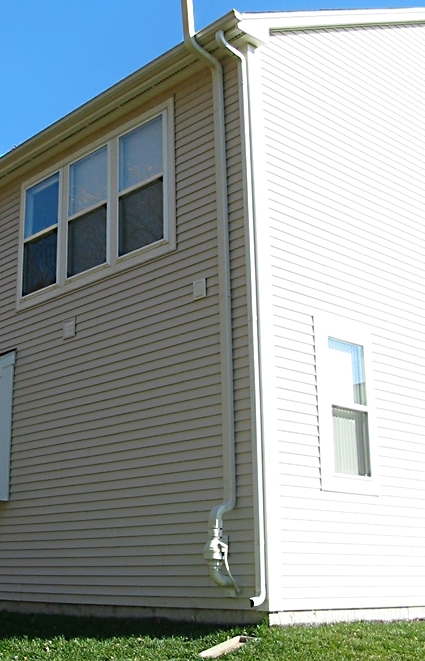
The most common fix is called sub-slab depressurization, or active soil depressurization. A contractor drills a hole through the basement slab, runs PVC pipe from below the slab to the outside, and installs a fan that pulls soil gas out from under the house and vents it above the roofline. Instead of seeping into the home, the radon is pulled into the pipe and released outdoors, where it spreads out quickly. Contractors also seal major cracks and openings, and most systems include a small gauge on the pipe so you can see at a glance that the fan is working.
Cost: The Utah DEQ says a mitigation system usually costs around $1,500, and another DEQ page puts it around $2,000. Your price depends on the size of the home, the foundation, and where the pipe can run. That's why bids matter.
Who can install it: The Utah DEQ advises consumers to verify that the installer is a Utah-licensed contractor with National Radon Proficiency Program certification. Ask for proof of both, and ask for before-and-after test results from past jobs.
Radon levels change, so keep testing
Radon levels move around. They can change with the weather, the season, and how the house is used, and readings are often higher in winter when the house is closed up. A test during your purchase tells you where the home stands that week. After you move in, it's worth testing again from time to time, and again after any big change, like finishing a basement, replacing the furnace or remodeling. If you have a mitigation system, check the gauge on the pipe now and then to make sure the fan is still running.
Free and low-cost radon tests in Utah
Once you own the home, retesting is cheap or free:
- Free kit: Utah residents can request a free test kit through UtahRadon.org, with shipping and lab analysis included.
- Utah DEQ kits: The state radon program sells short-term kits by mail. In January 2026, Weber-Morgan Health listed them at $13.95. You place the kit for three days, mail it to a lab and get the results by email.
Buyer's radon checklist
- Plan to test every home you put under contract, new or old.
- Schedule the radon test with your home inspection, early in due diligence.
- Use a certified tester with an hour-by-hour continuous monitor.
- Make sure the seller knows about closed-house conditions before the test starts.
- Look at the actual number, not just pass or fail. Decide what you're comfortable with between 2 and 4 pCi/L.
- If it's high, get bids from Utah-licensed, NRPP-certified mitigators, then negotiate a repair or credit before your due diligence deadline.
- Ask for a post-mitigation test, and keep all the paperwork.
- Retest after you move in, and after major changes to the home.
Quick answers
Should I test for radon when buying a home in Utah?
Yes. The Utah Department of Environmental Quality reports elevated radon in about 1 in 3 Utah homes tested, and new and old homes can both test high. Test during your due diligence period so you have time to negotiate if the result is high.
What is a safe radon level?
No level is completely risk free. The EPA recommends fixing homes at 4 pCi/L or higher and considering a fix between 2 and 4 pCi/L. The World Health Organization recommends a reference level of 100 Bq/m3, about 2.7 pCi/L.
How much does radon mitigation cost in Utah?
The Utah Department of Environmental Quality estimates a typical system at around $1,500 to $2,000. The price depends on the home's size, foundation and layout, so get several bids from certified contractors.
Who pays for radon mitigation in a Utah home sale?
It is negotiable. The seller may install a system before closing or give the buyer a credit. In Eliot Ward's experience as a Utah broker, the seller typically pays.
Do new construction homes in Utah have radon?
They can. Newer homes are just as susceptible as older homes, so new construction should be tested too.
What kind of radon test should I use during a home purchase?
A professional continuous radon monitor that records hour by hour, run for at least 48 hours under closed-house conditions, following EPA guidance for real estate testing.
Buying a home and not sure how to handle radon?
If you're about to go under contract, send me the address. I'll walk you through setting up radon testing in your due diligence period and what to ask for if the result comes back high.
Ask me about radon in the home you're buying
Selling instead? See which home upgrades are worth the cost before you sell, including how to think about radon.
Sources: U.S. EPA, Health Risk of Radon. U.S. EPA, What is EPA's Action Level for Radon. U.S. EPA, Home Buyer's and Seller's Guide to Radon (revised March 2024). World Health Organization, indoor radon reference levels. Utah DEQ, 1 in 3 Utah homes tested. Utah DEQ, High radon levels: what's next. Utah DEQ, qualifications for radon mitigation professionals. Alpha Energy Laboratories Utah data via KSL (sponsored by UtahRadon.org), March 2025. Daily Herald, January 2025. Weber-Morgan Health Department, January 2026. This article is general information, not medical or legal advice.